Independent Canadian Home & Living Review · Autumn 2026 Edition
Home systems · Prairie region
Preparing Your Home HVAC System for Harsh Prairie Winters
Long stretches below freezing put extra hours on furnaces, humidifiers and ventilation equipment. A measured autumn check can catch airflow problems before the cold settles in.
By Sarah Mitchell · Published 14 September 2026 · Reviewed 30 September 2026 · 8-minute read
Start with the basics
Prepare before the first deep freeze
Alberta, Saskatchewan and Manitoba can see rapid temperature drops and extended cold snaps. Your furnace needs an unobstructed air path, a clean filter and a safe supply of combustion air.
Book a qualified HVAC technician if the system has not had its scheduled service, if it cycles repeatedly, or if you hear new mechanical noise. Keep the equipment manual nearby; clearance and maintenance instructions vary by model.
Safety first. Leave burner adjustments, gas connections and sealed combustion components to a qualified professional. Keep working carbon monoxide alarms on every level of the home.
Small checks matter. Never block a return-air grille with furniture or storage.
Check the filter
Inspect it monthly during heavy heating use. Replace or clean it on the schedule printed on the filter and furnace instructions.
Listen to the blower
Note unusual rattles, vibration or delayed starts. Ask a technician to check the blower and motor during a service visit.
Indoor humidity
Let outdoor temperature guide the setting
As outdoor temperatures fall from about -20°C toward -35°C, windows and exterior corners become more prone to condensation. Lower the humidifier setting when moisture gathers on glass, then follow the equipment manual and your technician's advice.
Keep air moving
Clear supply registers and return grilles in every room. A closed door or a rug over a floor register can disrupt airflow and leave rooms unevenly heated.
Check basement returns, too.
Protect combustion air
Keep stored items away from the furnace and its air openings. Use the clearances in the appliance manual, and do not store fuel or chemicals beside heating equipment.
Check the HRV
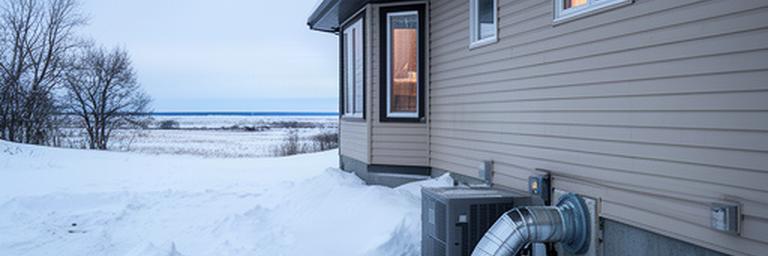
In airtight homes, a heat-recovery ventilator helps exchange stale indoor air. Clean its filters as directed and keep outdoor intake and exhaust hoods clear of snow.
Watch for core icing
Persistent frost, reduced airflow or water around the HRV can point to a defrost or drainage issue. Check the manual, then arrange service if symptoms return.
Before cold weather
A practical maintenance schedule
Use this as a planning guide alongside the instructions for your specific equipment. A filter's size and service interval depend on the system and household conditions.
Check
When
What to look for
Air filter
Inspect monthly in heating season
Dust loading, correct size and airflow direction
Blower and controls
Before sustained heating
Unusual sounds, delayed starts or frequent cycling
Combustible-air clearance
Before winter and after storage changes
Open air paths and clear space required by the manual
HRV filters and exterior hoods
As specified by the manufacturer
Clean filters, clear vents and signs of frost or water
Do not remove furnace panels or reach inside the cabinet to carry out these checks.
Your service appointment
What to ask the technician to record
A useful pre-winter visit leaves you with clear findings, not a vague assurance. Ask for the service record to identify the equipment model, work completed and any items that need follow-up.
Documented filter size and recommended inspection interval.
Blower, thermostat and safety-control checks completed.
Combustion and venting observations, where applicable to the system.
Humidifier and HRV maintenance notes, including any icing concerns.
Written recommendations and the reason each item needs attention.
Keep the record with your appliance manuals. It helps you compare observations from one season to the next.
Continue reading
Related Guides
Explore building-envelope choices and heating options suited to Canadian conditions. Our editorial standards explain how we check figures and date updates.